
Grandma knew best: why the "old ways" are the ultimate eco-friendly hack
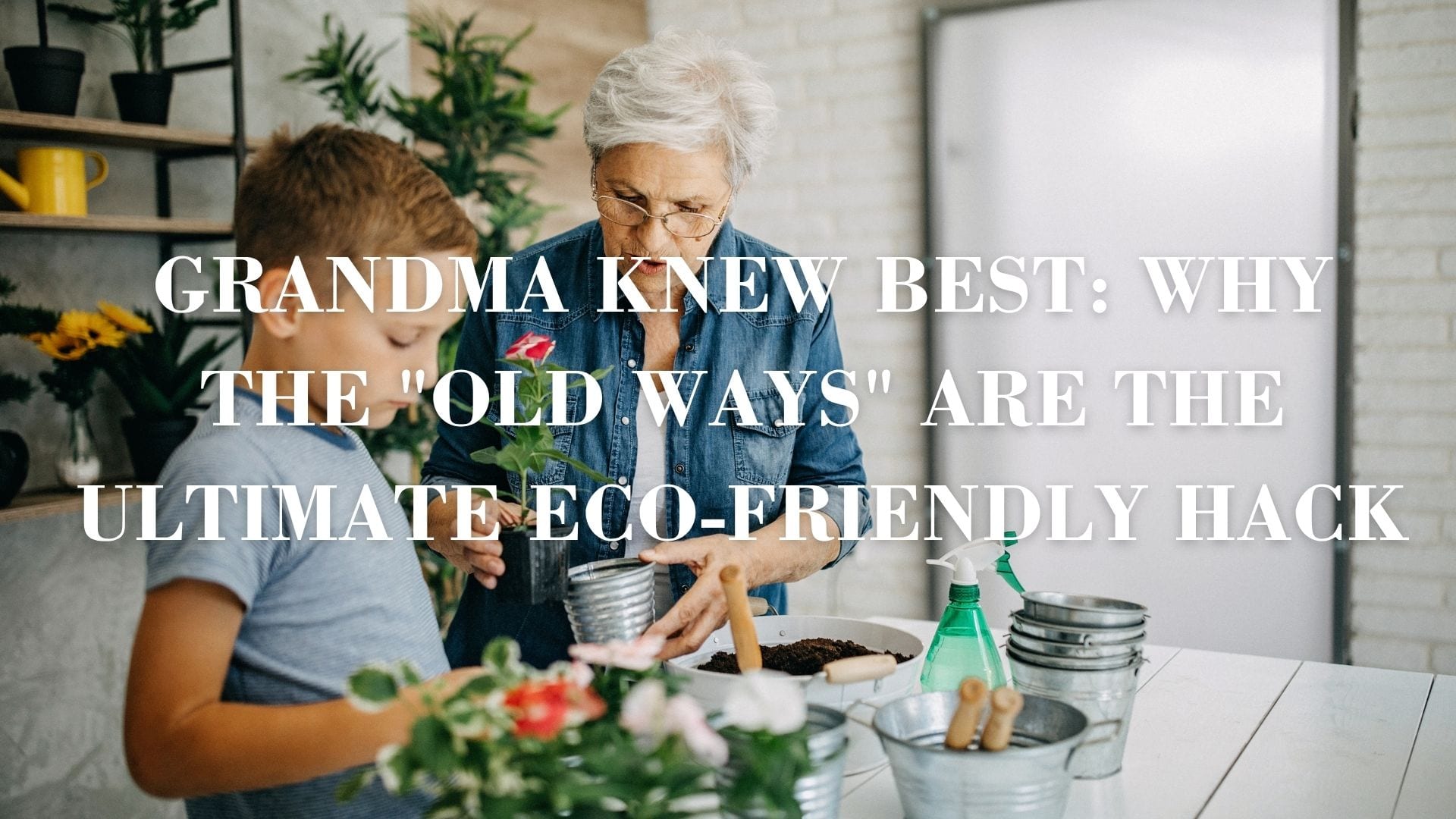
If you look at the modern sustainability movement: reusable jars, compost bins, second-hand clothes, buying in bulk... it looks a lot like a lifestyle we’ve seen before. We call it "eco-friendly" today, but for our grandparents, it was just the way life worked. They didn't have a special vocabulary for it; they just lived with a deep respect for resources.
The magic of the "just in case" jar
Remember the cupboard full of old jam jars? Or the butter tub that, when opened, actually contained leftover soup or a collection of buttons? Our grandmothers were the masters of the circular economy. Nothing was "single-use." A glass jar wasn't trash; it was a future vase, a spice container, or a place to store nails in the garage. They understood that an object’s life doesn't end just because it’s empty.
Repair over replace
In a world of fast fashion and cheap electronics, we’ve developed a habit of throwing things away the moment they break. But "Grandma’s generation" had a different reflex: they fixed it. Darning socks, patching elbows, or taking shoes to the cobbler wasn't just about saving money: it was about honoring the labor that went into making the item. There is something deeply grounding about wearing a sweater that has been mended by hand. It carries a story, not just a brand name.
The original natural cleaners
Before aisles were filled with plastic bottles of specialized chemicals for every corner of the house, there were three "superheroes": white vinegar, baking soda, and lemon. Our grandmothers knew that you could clean practically anything with these simple, non-toxic ingredients. It’s funny to think that after decades of complex chemicals, we are finally realizing that the simplest solutions were the healthiest for our homes and the planet all along.
Cooking with the seasons
There was a time when eating a strawberry in December was unheard of. You ate what the garden (or the local market) provided. This meant food was fresher, tasted better, and didn't have to travel thousands of miles to reach the plate. By following the rhythm of the seasons, they stayed connected to the earth’s natural cycles: a connection many of us are trying to rediscover today.
The lesson for us today
Being "green" doesn't have to mean buying expensive bamboo gadgets or high-tech gadgets. Sometimes, the most radical thing we can do for the planet is to look backward. By embracing a bit of that old-fashioned thriftiness, we realize that we don't need more to live better, we just need to take better care of what we already have.
Design by Monsieur Graphic