
La Bise: A Guide to The Bise
You walk into a party in France. Someone leans toward your face… Don't panic: it's la bise! The French do this little greeting several times
a day, and it is one of the most confusing customs for visitors. How many kisses? Who with? Which cheek first? Here is your guide.
One, two, three… or four kisses?
Even the French hesitate, because the answer depends on where you are. In most of the country, including Paris, two kisses are the rule. Head south, around Montpellier or Avignon for example, and you will often get three. In some areas of the North and the Centre, people go up to four, while in a few corners of Brittany, a single kiss is enough.
These numbers are approximate: they can change from one village to the next, or from one family to another. The best rule is just to follow the other person's lead.
Bise, handshake or nothing?
The French don't kiss everyone: it all depends on how well you know the person. With family and friends, la bise is almost automatic, both to say hello and goodbye. Friends of friends often get one from the very first meeting, especially among young people. At work, it depends on the company: close colleagues often exchange a bise, but with a boss or a client, a handshake is more usual. As for strangers, such as shopkeepers or officials, a simple “Bonjour” is enough.
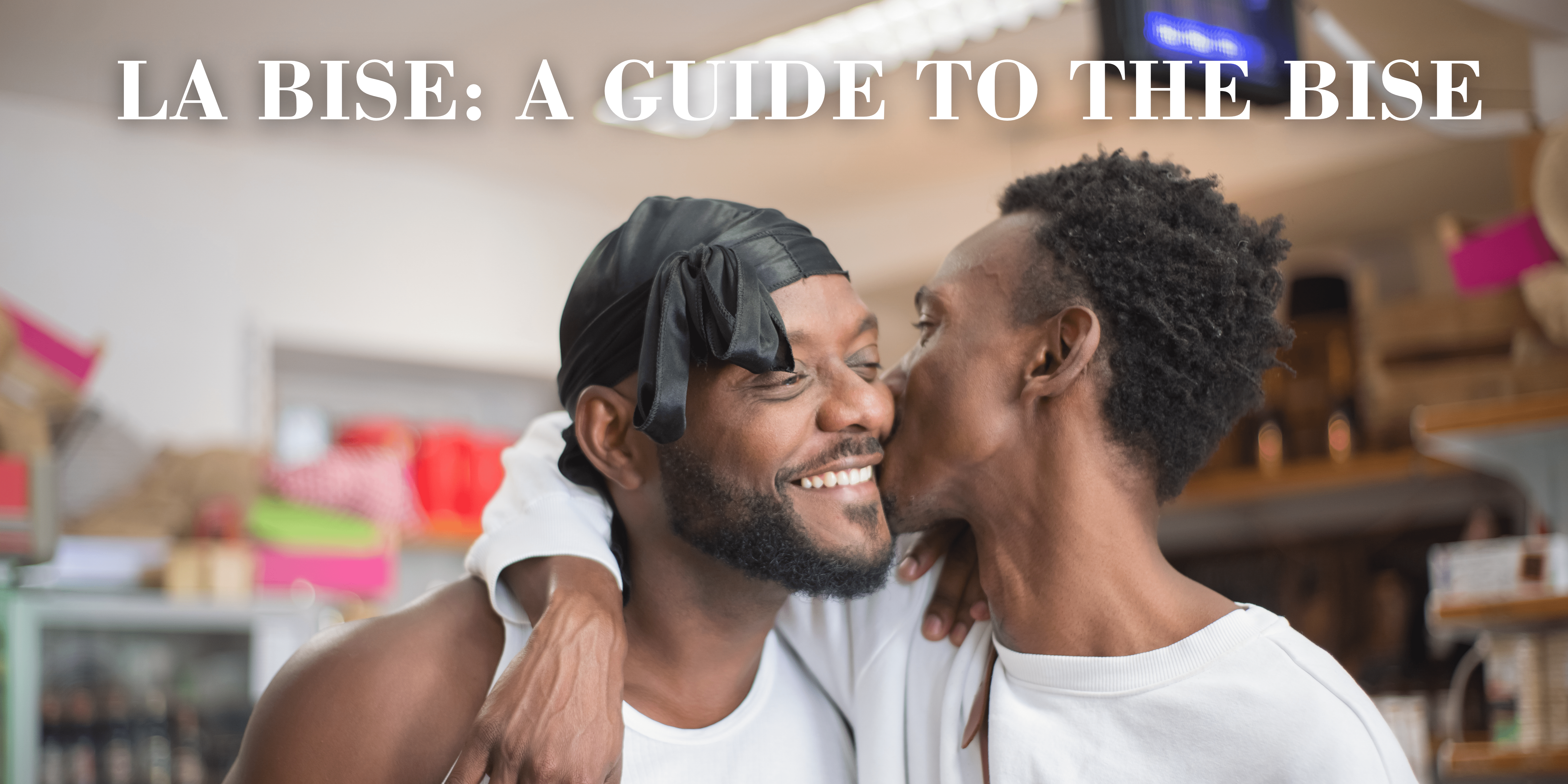
Between two men, a handshake is still more common. But in the family or between very close friends, many men also greet each other with a bise.
How to do it without bumping noses
La bise is not a real kiss. Cheeks barely touch, and lips don't touch the skin. People often make a small kissing sound, “mwah”, into the air. To avoid awkward moments, lean in slowly rather than rushing, and watch the other person's head, since which cheek comes first varies from region to region. There is no hug involved: at most, a light touch on the shoulder. And if you are not sure, simply offer your hand. Nobody will mind.
A tradition on the move
In 2020, with Covid, la bise almost vanished overnight. It has come back among friends and family. At work, though, many people kept the habit of greeting each other from a distance or with a simple wave.
Still, la bise remains a true symbol of French warmth. It's a way of saying: “I'm happy to see you.”
Design by Monsieur Graphic